Maintaining pristine pool tiles is essential for both the aesthetic appeal and longevity of your swimming pool.
Whether you’re dealing with stubborn calcium buildup, algae growth, or general grime accumulation, understanding the proper techniques for pool tile cleaning can save you time, money, and preserve your pool’s beauty for years to come.
Pool tiles serve as more than just decorative elements; they protect the waterline area from stains and mineral deposits while enhancing your pool’s overall appearance.
For homeowners in the DFW metroplex, Tropix Pools offers professional pool maintenance services that include expert tile cleaning, ensuring your pool remains a stunning centerpiece of your outdoor space.
Why Do Pool Tiles Get Dirty and Discolored?
Pool tile discoloration occurs due to a combination of factors that create the perfect environment for buildup and staining.
The primary culprits include calcium deposits from hard water, organic matter such as body oils and sunscreen residue, algae growth in favorable conditions, and chemical imbalances in your pool water.
Calcium buildup represents the most common and persistent problem facing pool owners.
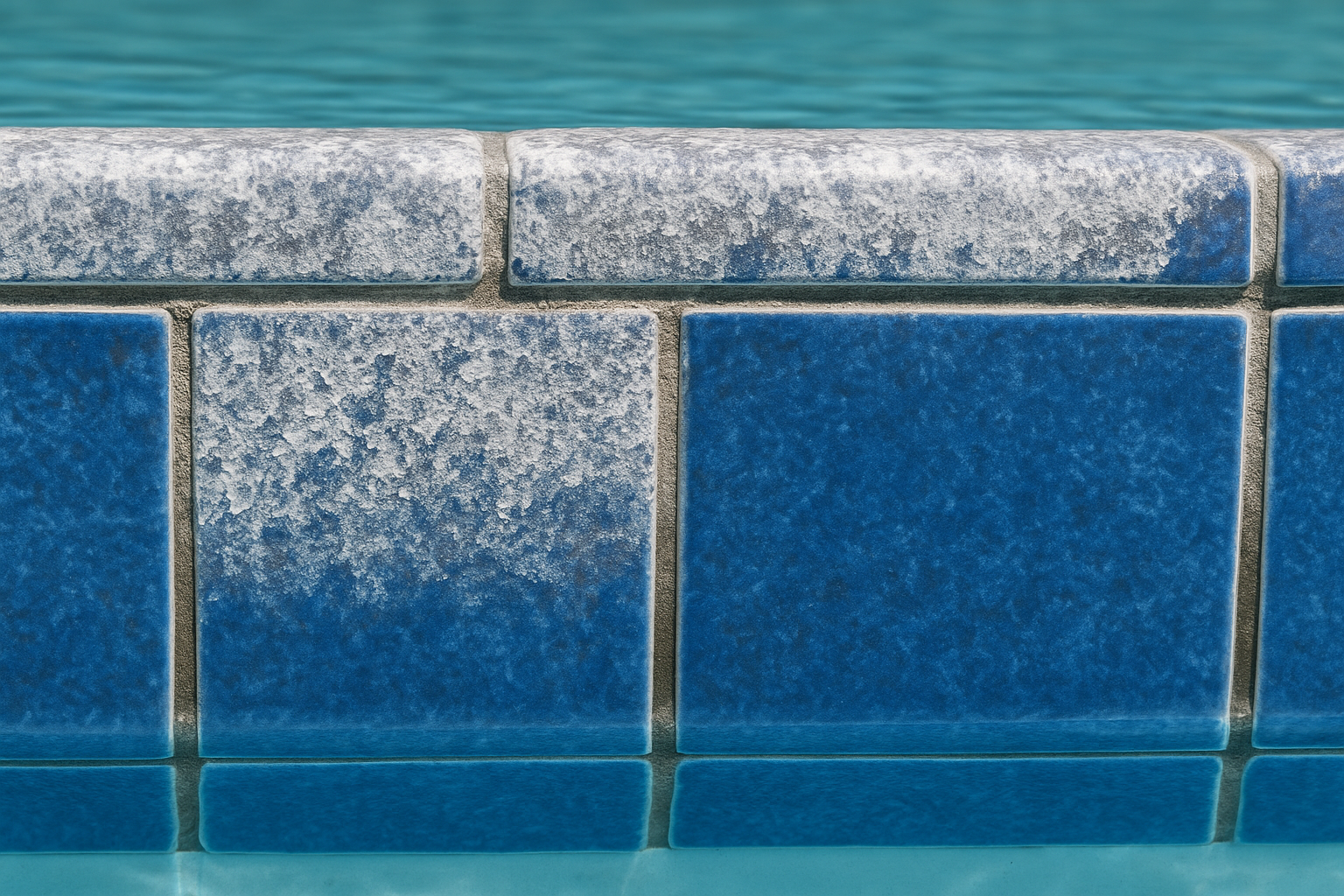
When pool water evaporates, especially during hot weather, it leaves behind dissolved minerals that crystallize on tile surfaces.
This process creates the characteristic white, chalky appearance that many pool owners struggle to remove.
The problem becomes more severe in areas with hard water, where high concentrations of calcium and magnesium naturally occur.
Body oils, sunscreen, and cosmetic products create an organic film that adheres to tile surfaces, particularly around the waterline where these substances concentrate.
Chemical imbalances in pool water significantly impact tile cleanliness, making proper water chemistry management crucial for prevention.
How Often Should You Clean Pool Tiles?
The frequency of pool tile cleaning depends on several factors, including water chemistry, usage patterns, environmental conditions, and the type of tile material.
Generally, pool tiles should receive attention at the first sign of discoloration or buildup, which typically occurs weekly to monthly during peak swimming season.
For most pools, a light cleaning every two weeks during active use prevents significant buildup and makes deep cleaning easier.
However, pools in areas with hard water, heavy usage, or challenging environmental conditions may require weekly attention.
Professional pool maintenance services can establish a customized cleaning schedule based on your pool’s specific needs.
What Cleaning Products and Tools Work Best?
Selecting appropriate cleaning products and tools is crucial for effective tile cleaning without damaging your pool’s surfaces or affecting water chemistry.
The best approach involves starting with the gentlest methods and escalating to stronger solutions only when necessary.
For light buildup and routine maintenance, natural cleaning solutions often prove effective and environmentally friendly.
A mixture of equal parts white vinegar and water creates an acidic solution that dissolves mineral deposits without harsh chemicals.
Baking soda paste, made with just enough water to create a thick consistency, provides gentle abrasive action for stubborn spots.
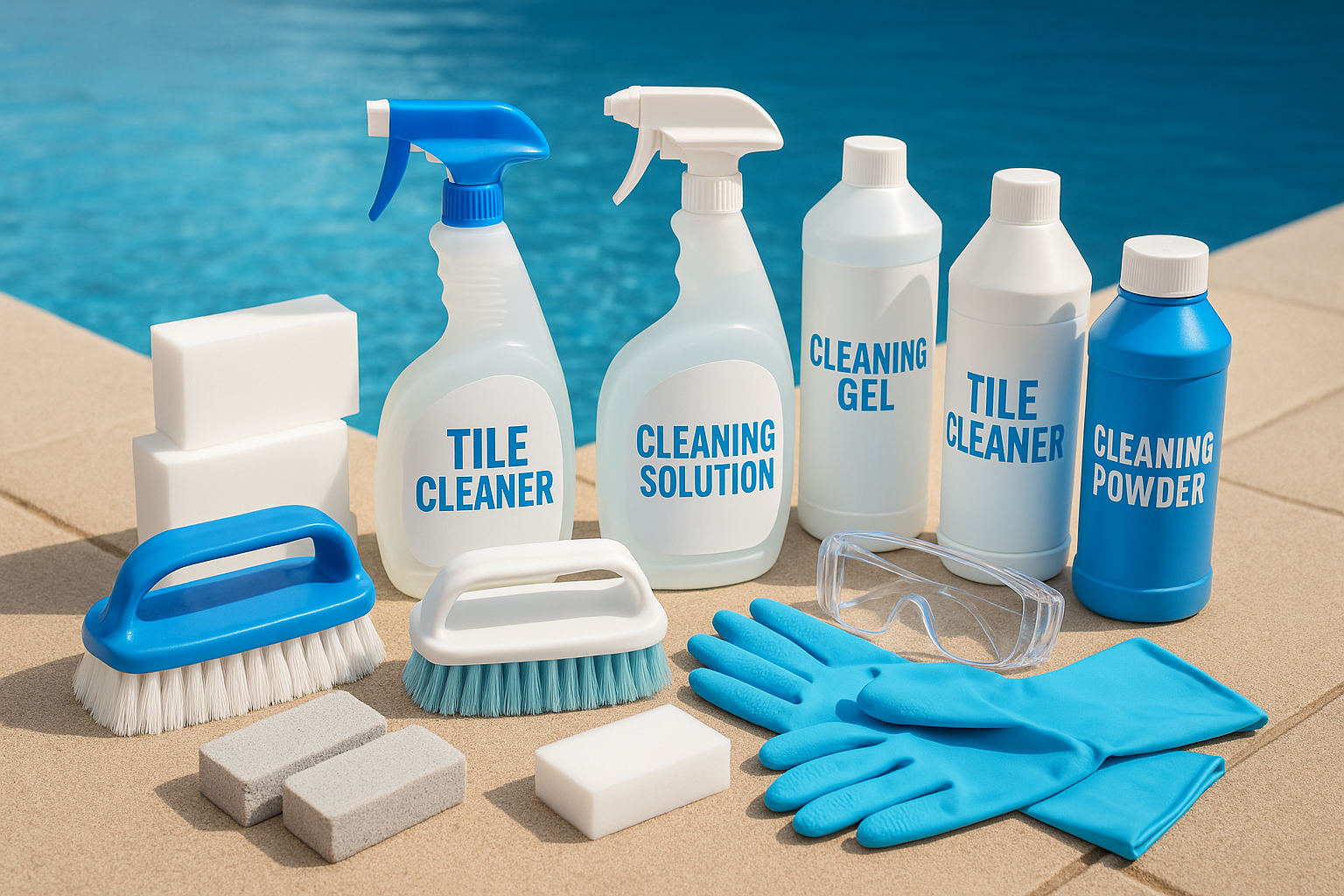
Essential tools for pool tile cleaning include soft-bristled brushes for gentle scrubbing, pumice stones for calcium removal (use carefully to avoid scratching), melamine sponges for tough stains, and pressure washers for large areas.
Quality protective equipment, including gloves, eye protection, and appropriate clothing, ensures safe cleaning practices.
How Do You Remove Calcium Buildup from Pool Tiles?
Calcium buildup removal requires a systematic approach that considers the severity of accumulation and the type of tile material.
Begin by lowering the pool water level below the affected tiles to provide better access and prevent immediate dilution of cleaning products.
For light calcium deposits, start with natural acid solutions such as vinegar or lemon juice.
Apply the solution generously to affected areas and allow it to sit for 10-15 minutes to dissolve mineral deposits.
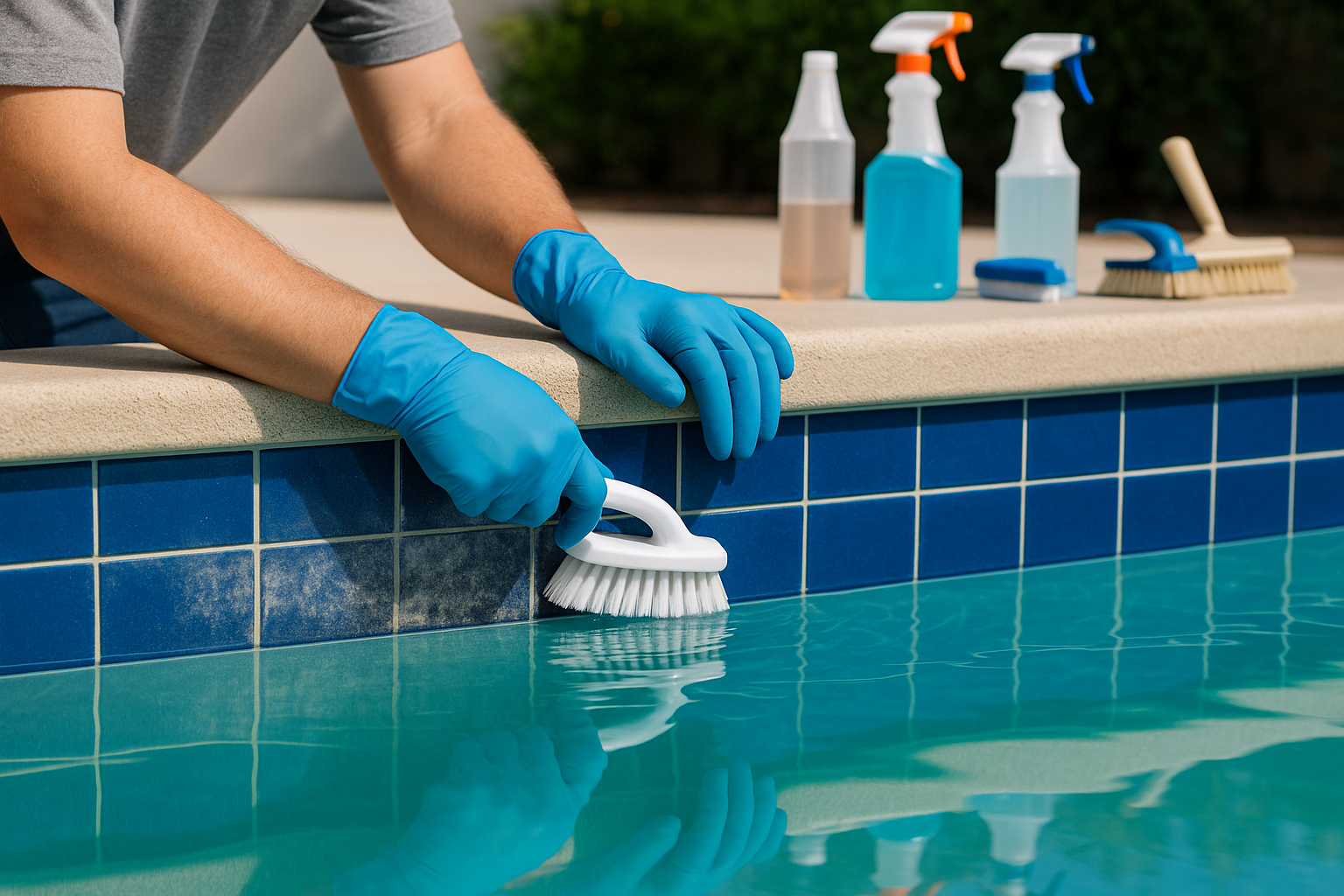
Use a soft-bristled brush to gently scrub the tiles, working in circular motions to avoid scratching.
Moderate calcium buildup may require commercial calcium removers or diluted muriatic acid solutions.
When using these products, follow manufacturer instructions carefully and work in small sections.
Severe calcium scale often necessitates mechanical removal combined with chemical treatment, where pumice stones can effectively remove thick deposits when used carefully.
What’s the Best Way to Clean Pool Tile Grout?
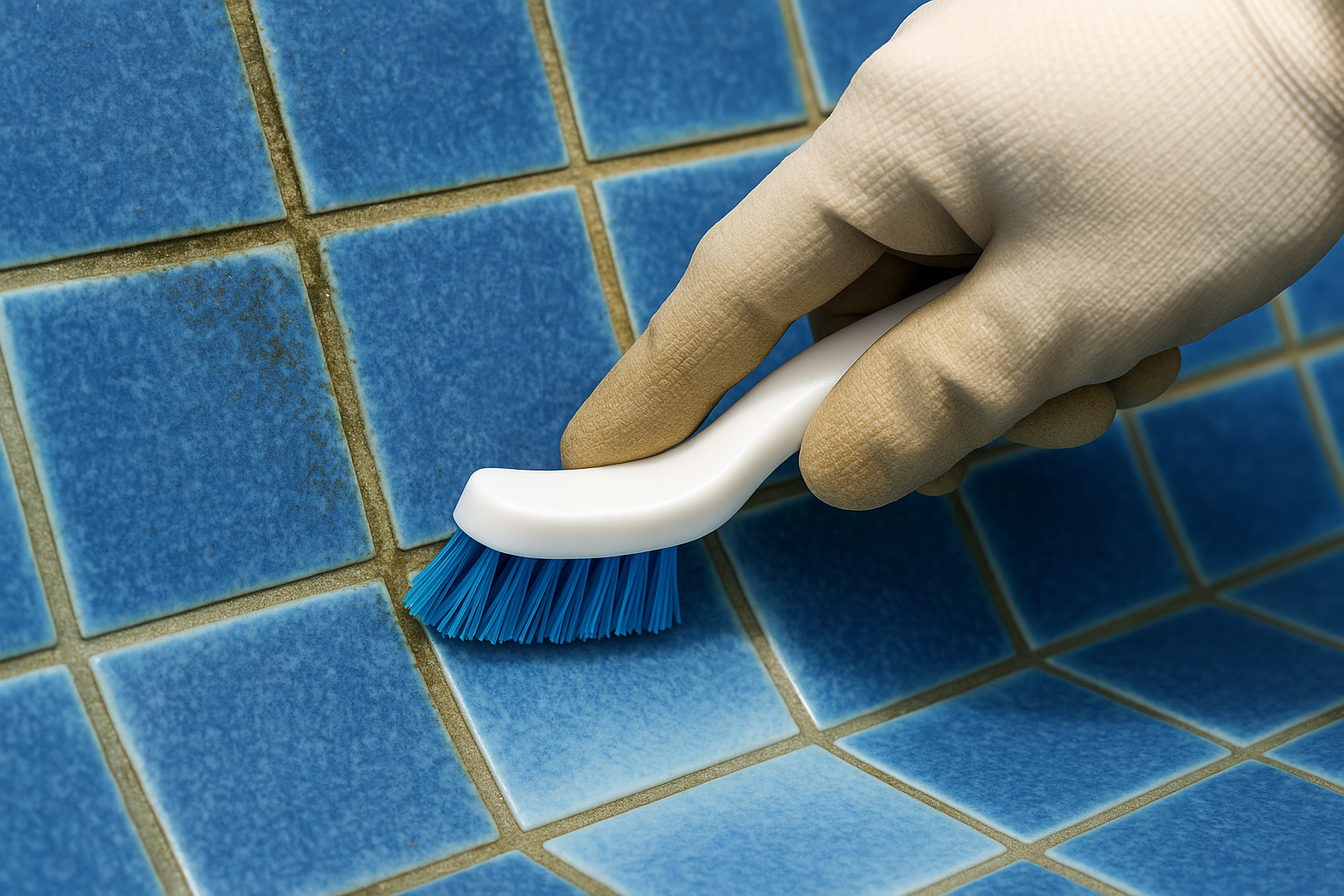
Pool tile grout requires special attention due to its porous nature and tendency to harbor algae, bacteria, and mineral deposits.
Effective grout cleaning involves both chemical treatment and mechanical action to restore appearance and prevent future problems.
For routine grout maintenance, a bleach solution effectively kills algae and bacteria while whitening discolored grout. Mix one part bleach with ten parts water and apply to grout lines using a spray bottle or brush.
Allow the solution to sit for several minutes before scrubbing with a stiff brush to remove embedded debris and stains.
Stubborn grout stains may require specialized grout cleaners or stronger bleach solutions.
Use a grout brush or old toothbrush to work the cleaner into grout lines, paying particular attention to areas with heavy staining.
After cleaning, rinse grout thoroughly and consider applying a grout sealer for future protection.
How Can You Prevent Pool Tile Staining?
Prevention represents the most effective approach to maintaining clean pool tiles and reducing cleaning frequency.
A comprehensive prevention strategy addresses water chemistry, regular maintenance, and environmental factors that contribute to tile staining and buildup.
Proper water chemistry forms the foundation of tile stain prevention.
Maintain pH levels between 7.2 and 7.6, alkalinity between 80-120 parts per million, and appropriate chlorine levels for your pool type.
Regular testing and adjustment prevent the chemical imbalances that promote calcium precipitation and algae growth.
Regular brushing and skimming remove organic matter before it can adhere to tile surfaces.
Brush tiles weekly during swimming season, paying particular attention to the waterline area where most problems occur.
Consider installing automatic pool cleaning systems that maintain consistent water circulation and filtration.
When Should You Call Professional Pool Tile Cleaners?
While many pool tile cleaning tasks can be handled by homeowners, certain situations warrant professional intervention to ensure effective results and prevent damage to pool surfaces.
Extensive calcium buildup that resists homeowner cleaning efforts often requires professional equipment and expertise.
Delicate or expensive tile materials, such as natural stone, glass, or custom ceramics, benefit from professional cleaning to prevent damage from inappropriate cleaning methods.
Professional pool builders often specify particular care requirements for premium tile materials that professionals understand and can implement safely.
For homeowners in the DFW metroplex, Tropix Pools provides comprehensive pool tile repair services that include expert tile cleaning, water chemistry management, and equipment maintenance.
Their team understands local water conditions and environmental factors that affect pool tiles, ensuring customized care for optimal results.
Conclusion
Maintaining clean pool tiles requires understanding the causes of buildup and staining, implementing appropriate cleaning techniques, and establishing effective prevention strategies.
Regular attention to tile cleaning preserves your pool’s appearance, protects your investment, and ensures a pleasant swimming environment.
Whether you choose to handle tile cleaning yourself or work with professional pool maintenance services, the key is consistency and proper technique.
For pool owners in the DFW area seeking professional assistance, Tropix Pools offers the expertise and local knowledge necessary for optimal results in both pool maintenance and pool tile repair.