
In North Texas, our “winter” can range from a light frost to a deep, multi-day freeze like we saw in 2021. Because most pools here are not fully winterized (drained and plugged), they rely on moving water to prevent ice from forming and cracking expensive equipment. Below are some guidelines that may help prevent or reduce pool damage during freezing temperatures.
The Golden Rule: Keep It Moving
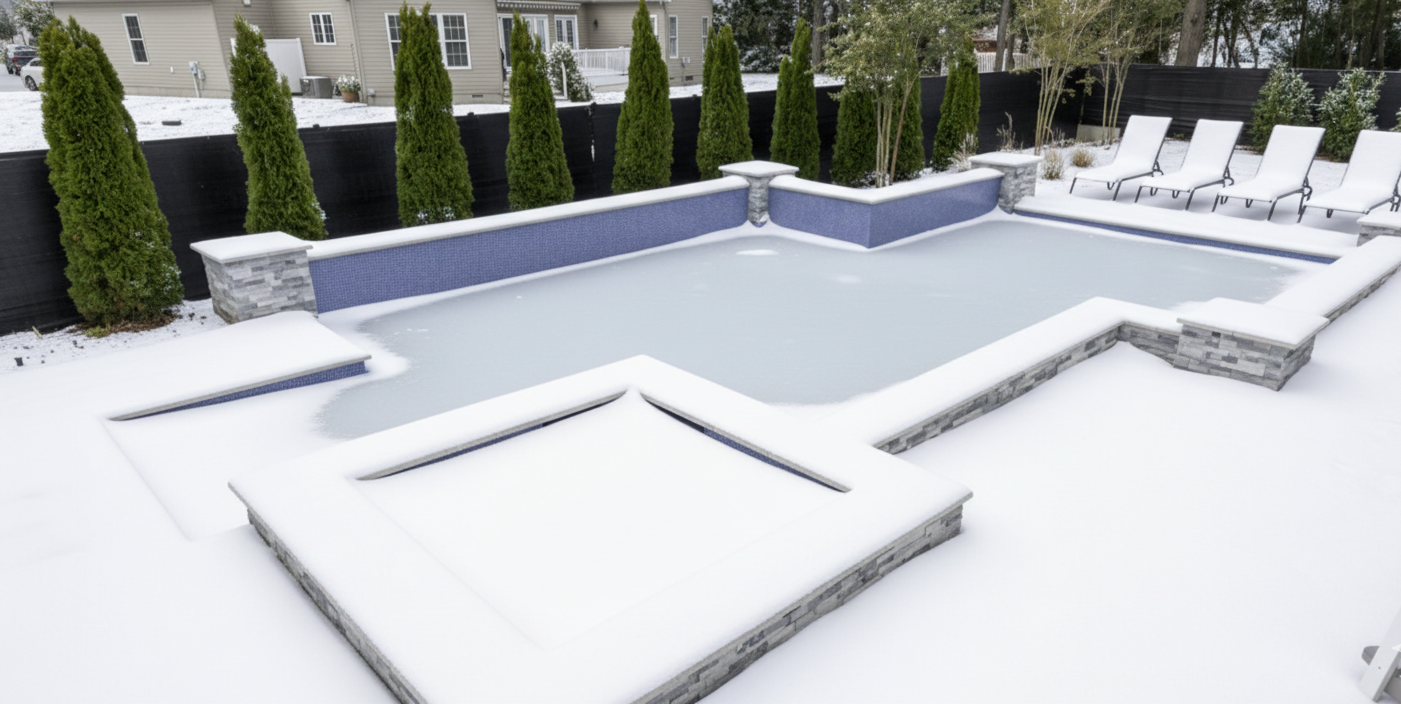
Moving water should not freeze, keeping your pool water moving is the most effective way to avoid freeze damage, period. As long as you can keep your pool water moving, you should be safe. If you cannot keep your water circulating due to equipment or power failure, please see some helpful steps below. Our technicians will do our best to assist with any questions. In order to keep everyone safe, our service agreement does allow for flexible service dates during weeks of freezing temperatures.
If you can’t run the equipment due to power failure or mechanical failure
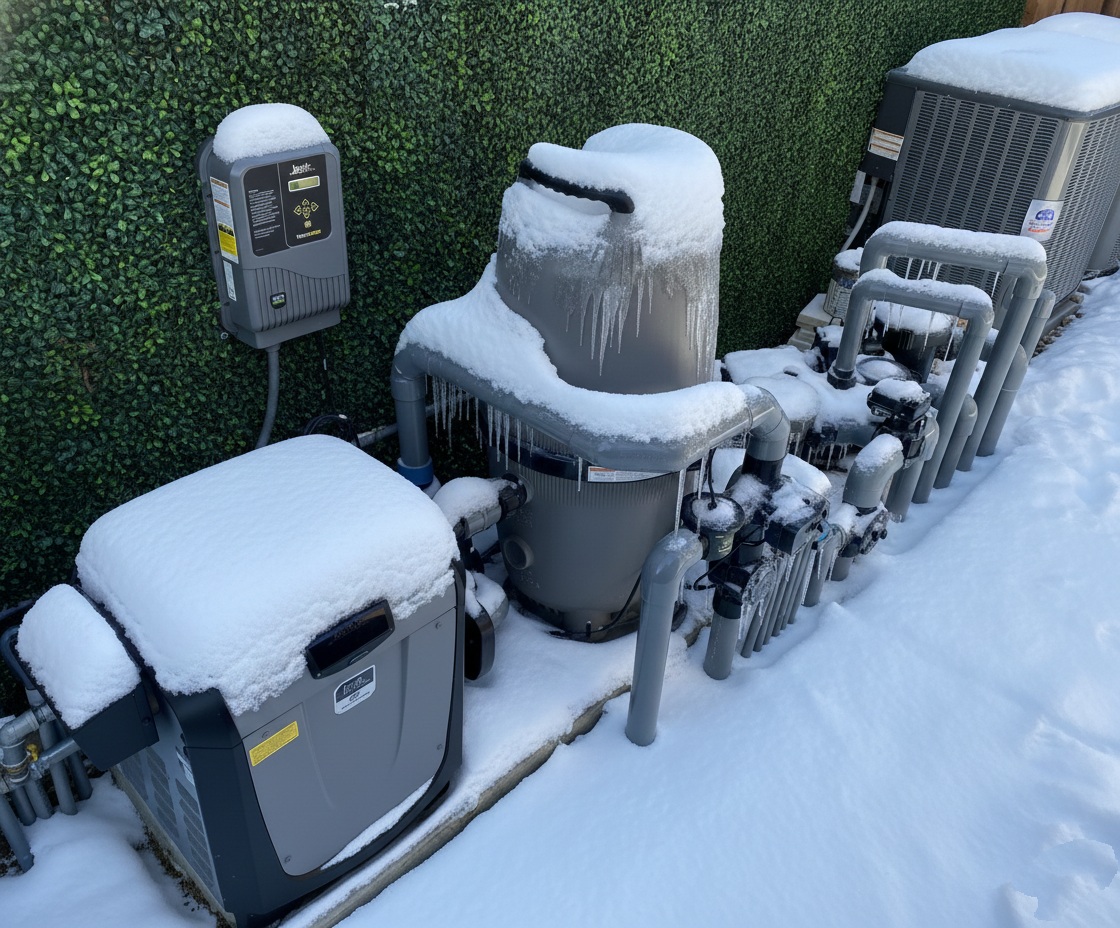
If you are physically capable and comfortable doing so, begin by shutting off power at the circuit breaker. Remove the drain plugs from the pool equipment in the following order: pump (2), filter (1), heater (2), and chlorinator (1), if applicable. Open the filter air bleeder to assist with faster drainage. This process will allow the plumbing to drain quickly.
Once drained, cover all equipment with heavy blankets for insulation. Remove skimmer baskets, drain them, and store them in a warm area. If accessible, above-ground PVC plumbing may be wrapped for added protection. After weather conditions improve, we can schedule a repair technician to assess any damage. Please do not restart equipment until it has completely thawed.
A reference video may be helpful for locating equipment in the event of a power outage: Freeze Protecting Pool in a Power Outage.
Freeze Protection Systems
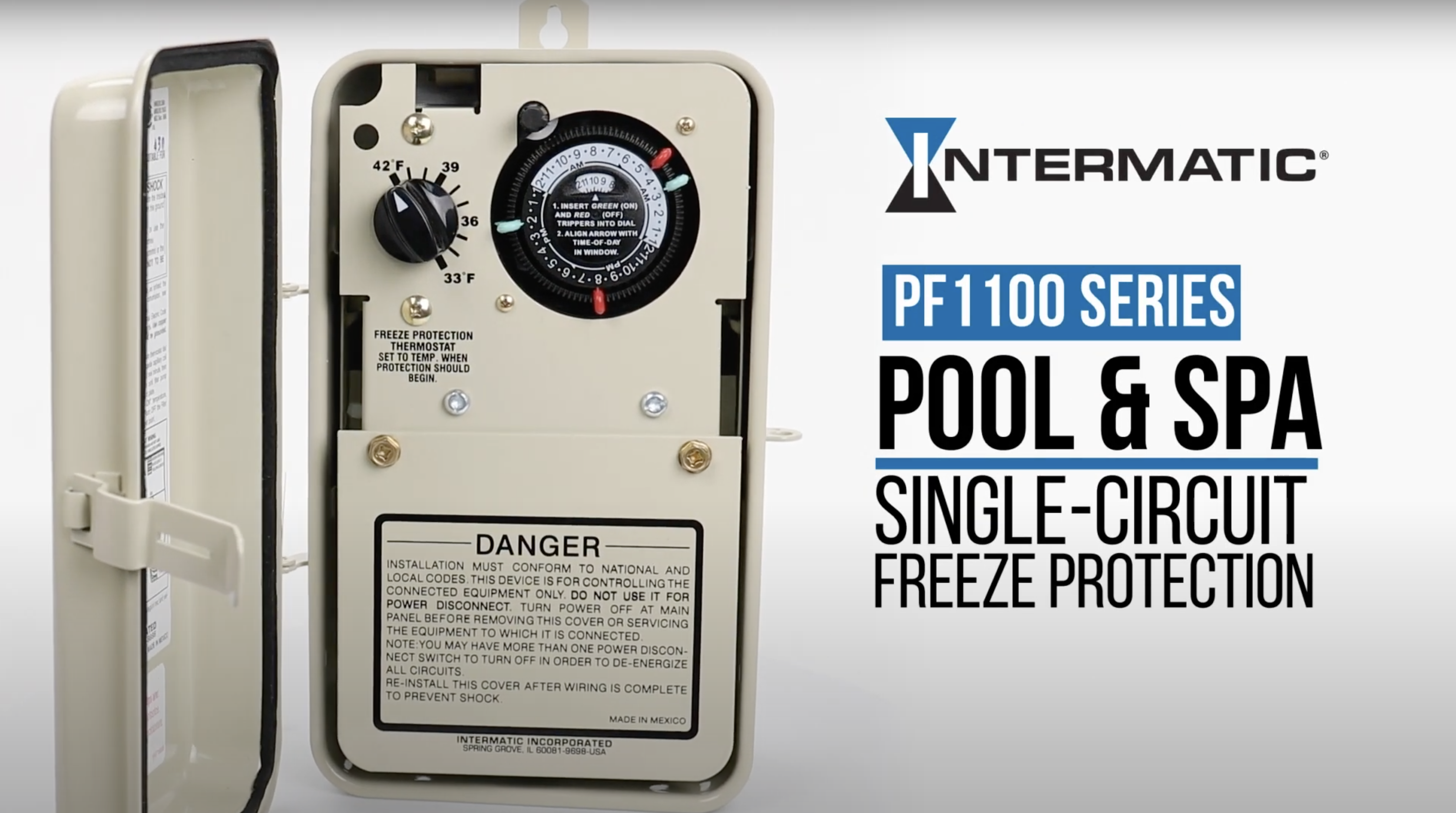
A freeze protector is designed to automatically circulate water when temperatures approach freezing, helping prevent damage to pipes and equipment. If your pool is equipped with freeze protection, monitor the system to ensure it is operating properly.
Confirm that all valves are open, including skimmers, drains, vacuum lines, returns, spa jets, and water features. Most pool systems intentionally lock out the heater during freeze protection. Heaters require proper water flow and safe operating conditions, and running them during freezing weather can damage heat exchangers, internal sensors, and gas components, especially on gas heaters.
If you feel comfortable, insulating exposed plumbing and non-automatic valves that are not near the pump or heater can be helpful. However, it is not recommended to use pipe heaters, heated blankets, or any electric heating devices on pool plumbing.
If You Do Not Have Freeze Protection
If your system does not have a freeze protector, run your filter pump 24 hours a day during freezing conditions to help prevent cracked equipment and frozen pipes. Continuous circulation:
- Keeps water moving
- Maintains a more consistent water temperature
- Helps distribute water
Variable-speed pumps are especially efficient in these situations, as they can run at low speeds for energy savings and be increased when additional circulation is needed. The best way to prevent freezing is to avoid allowing the system to become cold. If a pump does freeze, remove the drain plug to relieve pressure.
Protecting Your Pool Skimmer
Pool skimmers are vulnerable to cracking during freezing weather. A simple way to protect them is by using a “skimmer bottle”:
- Use an empty water bottle
- Fill it one-third full with pool antifreeze
- Secure the cap
- Place the bottle inside the skimmer
This acts as a pressure absorber, hopefully reducing stress on the skimmer walls as ice forms.
Valve Positions and Water Flow
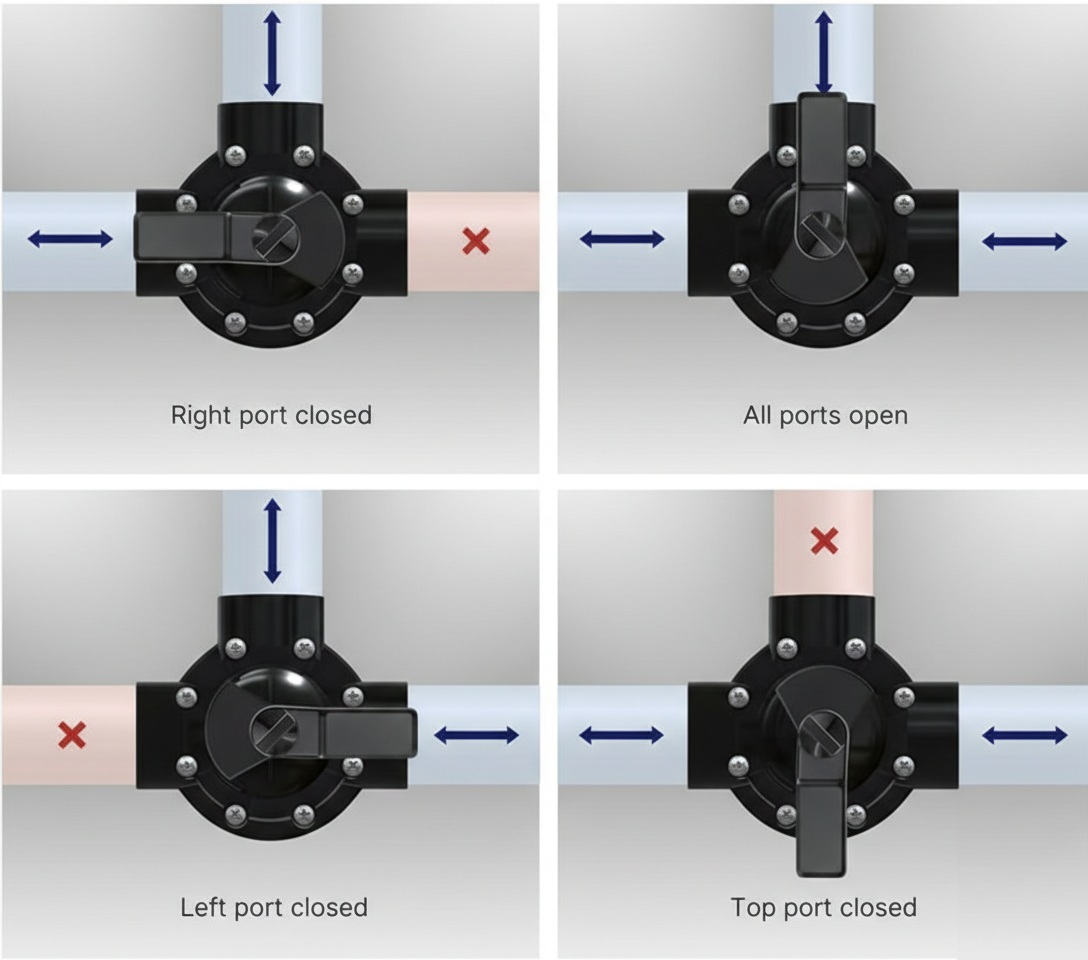
Ensure all valves are set to OPEN or FILTER. Keeping valves fully open allows for optimal circulation and heat distribution. Verify valve positions at the pump and filter during freezing conditions.
The diagram below reflects standard positioning for most valves; however, configurations may vary by manufacturer. Please verify the correct positioning for your specific valves.
Maintain Proper Water Level
Maintaining the correct water level, typically mid-skimmer, is especially important in winter. Water levels that are too high or too low can cause circulation problems or equipment damage.
If a thick ice sheet forms, add water beneath the ice to relieve pressure on tile and skimmers. Ice thicker than ¼–½ inch can exert outward pressure that may crack tile or loosen grout. Keep the pump running when possible to prevent water from freezing inside the plumbing.
Return Jet Positioning
Angle pool return jets slightly upward. Since water freezes from the surface down, directing warmer water toward the surface helps reduce surface ice formation and improves overall heat distribution.
Pool Covers and Insulation
Using a solar cover is one of the most effective ways to retain heat. Equipment covers also help protect pumps and plumbing. If no equipment cover is available, towels or foam insulation (including pool noodles) can be used around exposed pipes.
Do not use electric heaters, electric blankets, heat lamps, or portable gas heaters near pool equipment, as they pose serious fire and equipment-damage risks.
If using pool antifreeze, add it directly to plumbing lines at a rate of one gallon per 10 feet of pipe. Never use automotive antifreeze it is toxic and can damage pool surfaces and equipment.
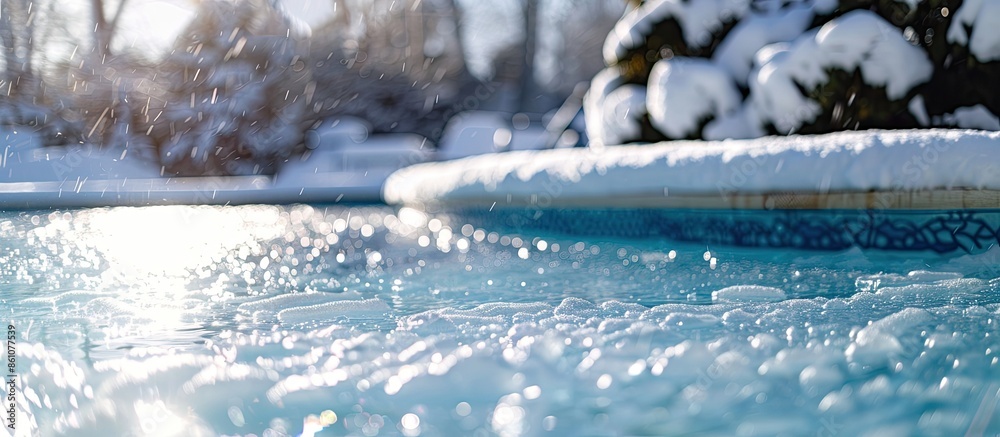
If Your Pool Has Frozen
Above-ground PVC plumbing can crack if water freezes inside. If freezing has occurred:
- Shut off power
- Drain equipment and plumbing
- Cover equipment
- Allow everything to thaw naturally
Do not restart the system until it has completely thawed. Once conditions improve, contact us to schedule an inspection.
Additional Common Questions
If the pool surface is frozen but the pump is running:
- Monitor system operation
- Maintain water level
- Keep all valves open
- Keep children and pets off the ice
- Do not break or melt ice manually
Water features frozen:
- Remove nozzles if possible
- Add pool antifreeze to lines
- Do not force or break ice
Pool cleaners:
- May operate if water is not frozen
- Drain and store indoors after use
Automatic covers:
- Avoid operating if the surface is frozen
- Keep water pumped off the cover
Salt pools:
- Can freeze like any pool
- Salt does not protect equipment
Backwashing filters:
- Safe if water is moving
- Maintain water level if ice is present
Leaks during freezing:
- Add water to support ice sheets
- Schedule inspection with Tropix Pools once weather improves