
If you are shopping for a pool cleaner, you are likely deciding between two main options: robotic pool cleaners and pressure-side pool cleaners. Both can clean your pool effectively, but they work very differently.
ROBOTIC POOL CLEANERS
Examples include the Dolphin Cayman, Dolphin Quantum, and Dolphin Premier.
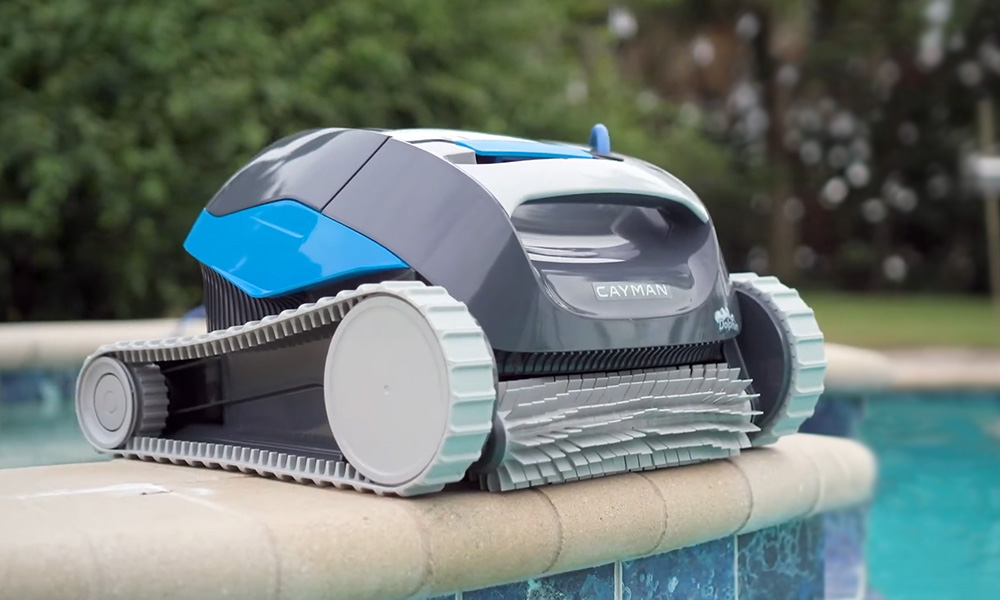
Pros
Full Pool Coverage
Most robotic cleaners clean the floor, walls, and waterline.
- Smart Navigation- They use onboard mapping systems to clean efficiently instead of moving randomly.
- Active Scrubbing Brushes- Spinning brushes loosen dirt and algae rather than just vacuuming debris.
- Energy Efficient- They plug into a standard outlet and do not require a booster pump.
- Customizable Filtration- Many models allow you to change filters (fine or ultra-fine) for better water clarity.
- Easy Setup- Simply plug in, place in the pool, and press start.
- Longer Warranty- Most robotic cleaners come with a 2 to 3 year warranty.
Cons
- Higher Initial Price
- Some models cost more upfront than pressure-side cleaners.
- Requires an Electrical Outlet
- A nearby GFCI outlet is necessary.
- Should Be Removed After Use
For best longevity, most manufacturers recommend taking it out of the pool after cleaning.
PRESSURE-SIDE POOL CLEANERS
Examples include the Polaris Vac-Sweep 280 and Polaris 360.
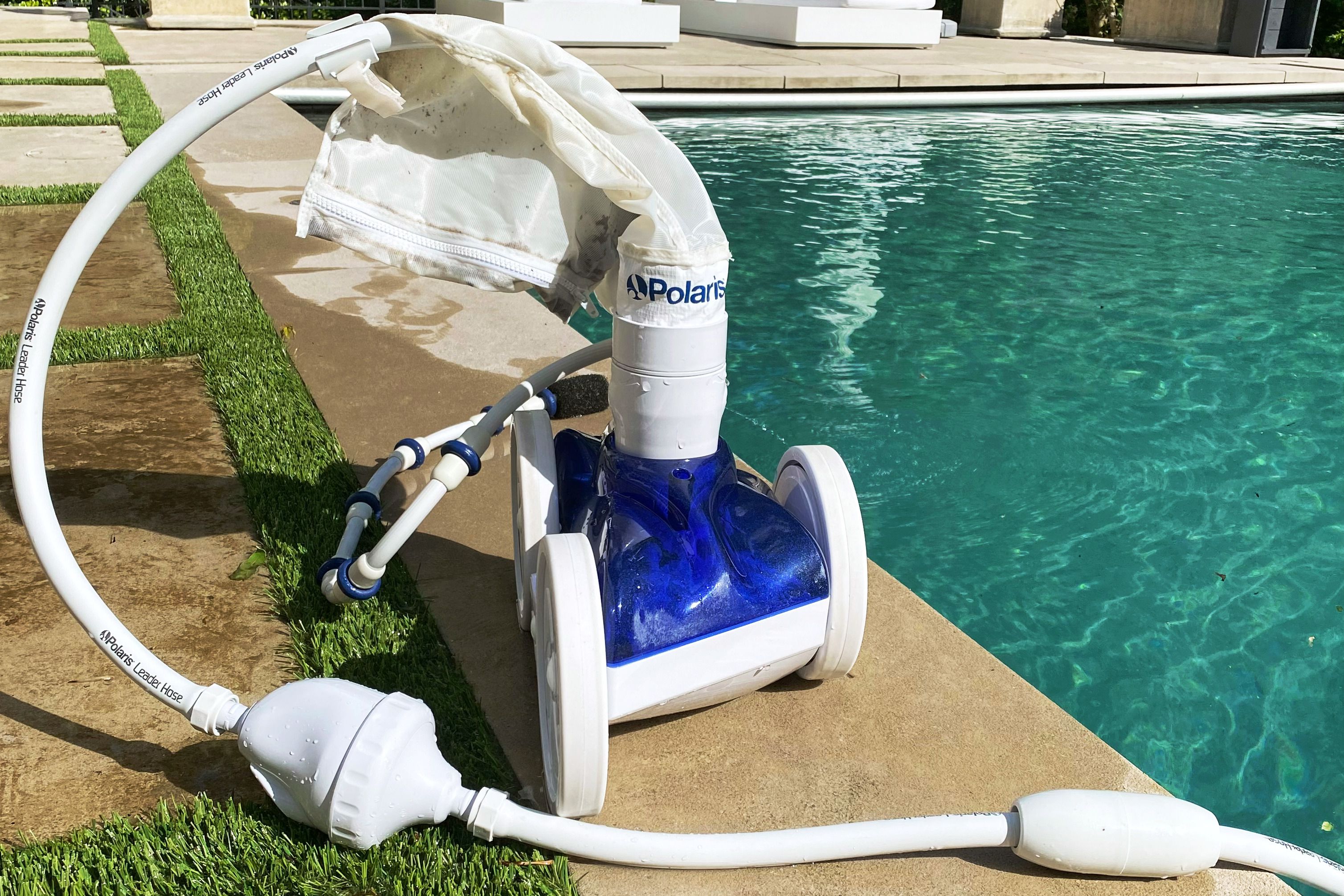
Pros
- Lower Purchase Price (Cleaner Only)
- The unit itself may cost less at first glance.
- Simple Mechanical Design
- Fewer electronic components.
- Handles Large Debris
- Debris bags can collect leaves effectively.
- Can Stay in the Pool
- Many owners leave them connected full-time.
Cons
- Often Requires a Booster Pump
- Many models need an additional pump, which increases installation cost.
- Higher Energy Use
- Booster pumps can use 700 to 1000 watts.
- Random Navigation
- They move based on water pressure and typically do not map the pool.
- No Active Scrubbing Brushes
- They vacuum debris but do not aggressively scrub surfaces.
- Limited Filtration Options
- No interchangeable filter panels.
- Shorter Warranty Often around 1 year.
COST CONSIDERATIONS
Pressure-side cleaners may appear less expensive initially. However, when you include:
- Booster pump
- Electrical installation
- Increased energy usage
The total cost can match or exceed that of many robotic pool cleaners.
Robotic cleaners may cost more upfront but typically do not require additional plumbing or pump installation.
FEATURE COMPARISON SUMMARY
Robotic Pool Cleaner
- Smart navigation
- Cleans waterline
- No booster pump required
- Lower energy use
- Multiple filter options
- Plug-and-play setup
Pressure-Side Pool Cleaner
- Mechanical operation
- May require booster pump
- Higher energy use
- Debris bag only
- Plumbing installation required
Feature Comparison Snapshot
|
Feature |
Robotic Cleaner |
Pressure-Side Cleaner |
|
Pool Mapping |
Yes |
No |
|
Waterline Cleaning |
Yes |
Limited |
|
Booster Pump Required |
No |
Often Yes |
|
Energy Usage |
Low |
Higher |
|
Filter Options |
Multiple |
Single debris bag |
|
Setup Complexity |
Plug & Play |
Plumbing + pump |
FINAL THOUGHTS
Both robotic and pressure-side pool cleaners can maintain your pool effectively. The right choice depends on your budget, existing equipment, and how much automation you prefer.
If you value smart navigation, energy efficiency, and easy setup, a robotic cleaner may be a strong fit.
If you already have a booster pump installed and prefer a mechanical system that remains in the pool, a pressure-side cleaner may work well.
Choosing the right pool cleaner can make maintenance easier and help keep your pool consistently clean all season long.
robotic pool cleaner vs pressure-side cleaner, best pool cleaner 2026, Dolphin Cayman review, Polaris 280 review, pool cleaner pros and cons, energy efficient pool cleaner, pool cleaning comparison